

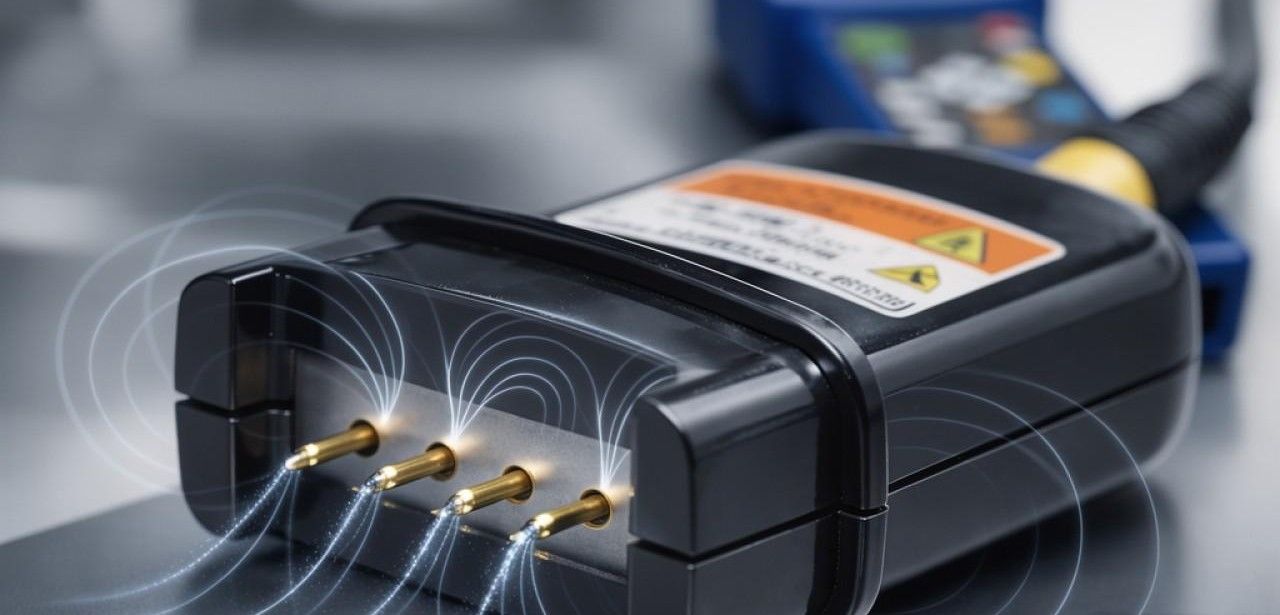
The introduction emphasizes the pivotal role of electrical conductivity as an essential metric in material development, quality assurance, and process monitoring across modern industries. It highlights limitations of conventional resistance measurements and the necessity of calculating specific conductivity. It underlines the importance of standardized four-point measurement protocols and well-defined procedures to generate reliable material properties. Such accurate, comparable data serve as the cornerstone for sound informed technical and economic decisions.
Table of Contents: What awaits you in this article
Specific Conductivity Calculation Enables Reliable Data For Industrial Applications
Electrical conductivity measurement is a crucial indicator in material development, quality assurance, and process monitoring for industrial applications. NH Instruments highlights that standard resistance measurements often yield data with poor comparability and reproducibility. Reliable material parameters require calculation of specific conductivity, use of standardized four-point measurement methods, and adherence to defined procedures. These practices underpin technical and economic decision making, providing consistent, accurate data throughout research, development, and production stages.
In sectors ranging from semiconductor manufacturing to battery research and conductive polymer development, sample geometries, inconsistent contact arrangements, and unstandardized measurement procedures frequently generate technically accurate but incomparable electrical results. The underlying issue is that raw resistance readings reflect the measurement configuration rather than intrinsic material properties. Without correcting for sample shape, size, electrode contact resistance, and standardized protocols, these data offer limited reliability when guiding development and quality-assurance decisions.
Specific Conductivity Delivers Objective Material Evaluation Regardless Of Contacts
NH Instruments clarifies that electrical resistance represents a measurement influenced by the testing system rather than intrinsic material properties, since it depends on geometry, electrode placement and contact conditions. Only specific conductivity, derived from cross-sectional area and length, serves as a material characteristic. It is normalized, eliminating variability introduced by sample shape, size and mounting. By focusing on conductivity, engineers can objectively compare specimens and reliably assess performance across applications.
4-Point Measurement Guarantees Reliable Conductivity by Minimizing Contact Resistances
The two-point measurement technique is used due to its simplicity and minimal equipment, but it suffers from contact resistance effects that can distort electrical conductivity readings. NH Instruments recommends the four-point measurement method instead, which utilizes separate probes for current injection and voltage measurement. By decoupling voltage sensing from the current path, this procedure minimizes electrode contact errors and delivers more accurate, reproducible conductivity values essential for research and development.
Reliable Conductivity Data Requires Defined Sample Preparation And Documentation
NH Instruments emphasizes that accurate conductivity data arise from a holistic, standardized testing process rather than individual measurements. Essential steps include sample preparation, consistent measurement parameters, and complete documentation of each procedural action. This methodology guarantees reproducibility and comparability of results, establishing a reliable basis for technical analyses and economic evaluations. Absent these rigorous controls, conductivity measurements lack consistency and fail to provide the insights necessary for critical industrial decision-making.
Reliable Conductivity Measurements: Backbone for Material Approval Through Production
This technical article is intended for development engineers, materials scientists, and procurement specialists who integrate conductivity measurements into their workflows. It highlights that precise conductivity data do not arise in isolation, but instead represent a critical element throughout the entire value streamâbeginning with raw material qualification and continuing through prototyping, scale-up, quality control, and full-scale manufacturing. By establishing standardized protocols, organizations can ensure reliable, comparable electrical performance metrics and accelerate informed decisions from concept to series production.
Standardized four-point techniques ensure reliable comparable material conductivity data
The deliberate transition from basic resistance measurements to standardized conductivity determinations, combined with four-point probing and a rigorous measurement workflow, empowers companies with dependable, comparable, and reproducible material performance data. By normalizing test protocols and minimizing contact impedance effects, this approach ensures consistency across diverse sample geometries and production stages. As reliable conductivity values underpin both engineering design choices and cost analyses, organizations gain a robust foundation for technical validation and economic optimization.