
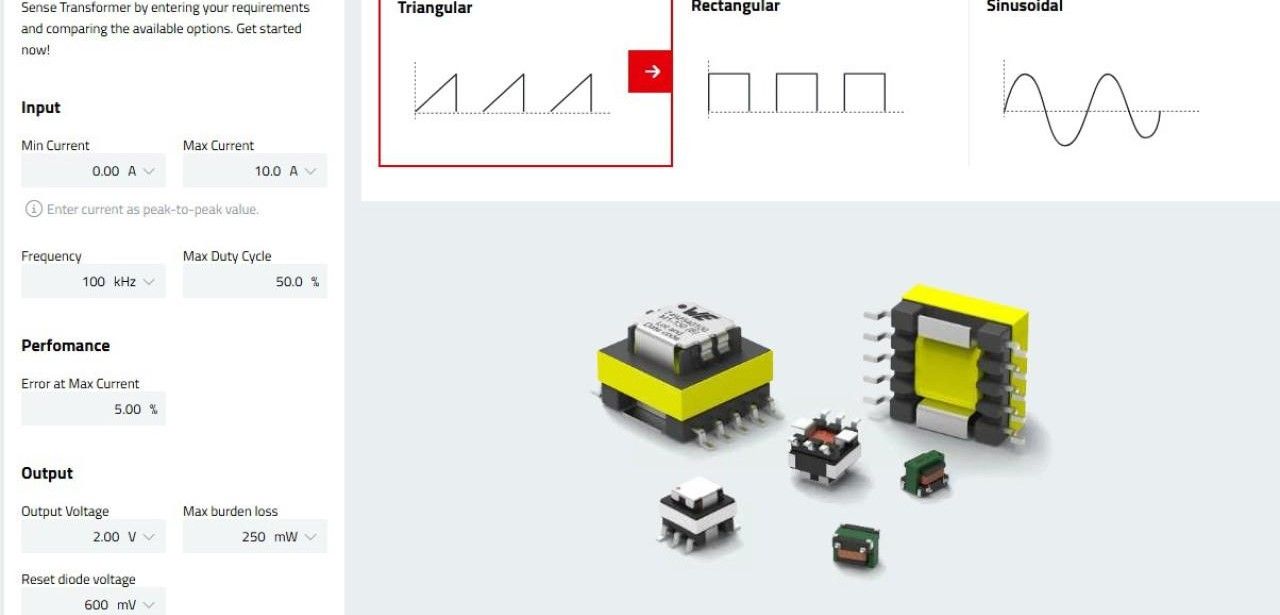
The free Current Sense Transformer Selector from Würth Elektronik integrates into the REDEXPERT design tool, offering specialized selection of galvanically isolated current sensors. Engineers specify parameters such as current amplitude, operating frequency, signal type and maximum error. The tool automatically filters the extensive product database, generates temperature rise and error simulations including error curves, compares multiple transformers. It significantly reduces testing efforts while providing performance data for optimized sensor selection.
Table of Contents: What awaits you in this article
REDEXPERT Announces Current Sense Transformer Selector For Streamlined Design
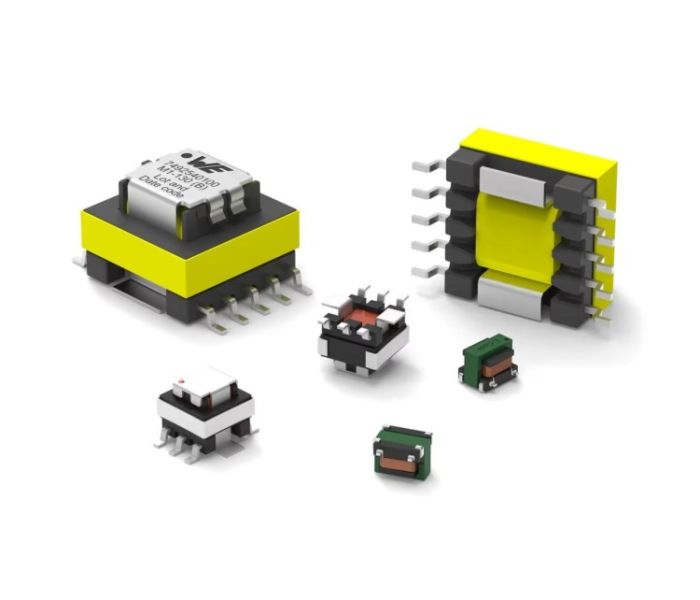
Würth Elektronik bietet eine große Auswahl an Strommesswandlern. (Foto: Würth Elektronik eiSos GmbH & Co. KG)
With its update, Würth Elektronik enhances the free REDEXPERT design environment by introducing the Current Sense Transformer Selector. Engineers and designers can now specify current ratings, operating frequencies, signal characteristics, and permissible error margins to automatically filter the catalog of galvanically isolated current sensing transformers. The intuitive interface guides parameter entry step-by-step, then generates a concise list of compatible components. This streamlined approach eliminates manual search and accelerates sensor selection.
Current Transformer Selector filters options using defined electrical parameters
Upon specifying current amplitude, operating frequency, signal type, and maximum error tolerance, the Current Sense Transformer Selector automatically queries the Würth Elektronik database. It generates a list of suitable galvanically isolated transformers, presenting precise performance specifications including turns ratio, core composition, saturation limits, and thermal behavior. This clear overview enables engineers to quickly compare options, evaluate key characteristics, and select the best innovative sensor device for diverse application needs optimally.
Simulation of Temperature Rise and Measurement Error Across Frequencies
Using real measurement datasets, the software projects thermal performance and quantifies measurement inaccuracies across specified frequency and current ranges. By mapping temperature rise curves and error deviations, engineers can identify exact operating scenarios that drive a signal transformer into magnetic saturation or breach its error tolerance threshold. Interactive graphs convey the relationship between load conditions and performance, enabling rapid evaluation of component suitability under electrical stress without time-consuming lab tests.
Simulation View Enables Direct Comparison of CST Options Performance
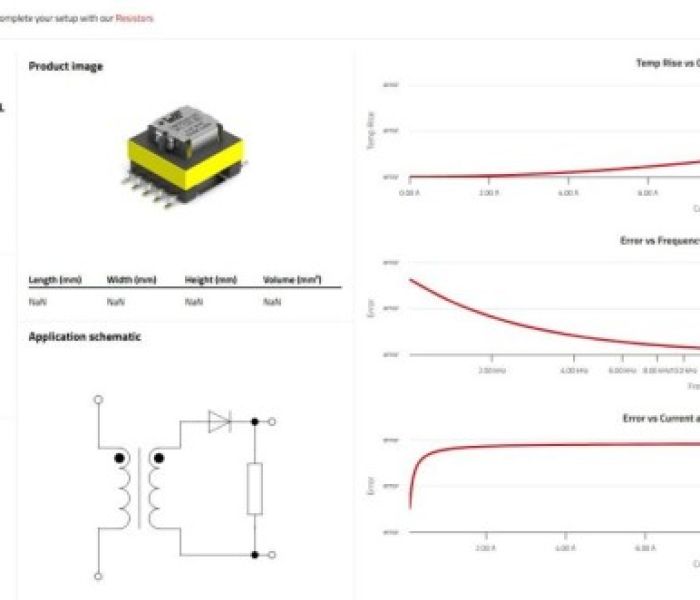
Das Tool gibt den geeigneten Strommesswandler (Foto: Würth Elektronik eiSos GmbH & Co. KG)
In a dedicated simulation interface, engineers can simultaneously analyze multiple current sense transformer configurations, comparing their thermal performance and measurement accuracy across varying current amplitudes and frequency ranges. Realistic modeling of temperature rise and error propagation allows direct visualization of how each transformer behaves under operating scenarios. This side-by-side comparison streamlines component evaluation, enabling developers to quickly identify optimal sensors, minimize design risks, and make decisions based on performance insights.
Simulation leverages real measurements, significantly reducing developers’ testing workload
The simulation leverages authentic measurement datasets, eliminating the need for engineers to conduct extensive in-house testing. By providing accurate projections of thermal accumulation and error margins across operating conditions, the platform streamlines validation workflows. Consequently, quality assurance cycles are accelerated, while resource expenditure diminishes. Project timelines benefit from concise performance insights, ensuring rapid iterations and more component integration. This data-driven approach significantly minimizes manual trial efforts and shortens development schedules.
Manual Transformer Selection Needs ET Constant, Saturation, Error Considerations
Selecting a suitable current transformer traditionally demands careful evaluation of multiple parameters. Engineers must assess the ET constant to ensure precise measurement and verify saturation protection to avoid distortion under high currents. Thermal limits dictate maximum operating conditions and safeguard against failure. Manufacturers specify error characteristics influencing overall accuracy. Since datasheets often lack comprehensive application-specific details, practical validation involves testing several parts to identify the optimal solution.
Optimize AC and HF Sensing with Dedicated Transformer Selector
Current sense transformers serve diverse roles in energy management, accurately measuring alternating currents in grid and industrial environments. They detect overloads to trigger protective shutdowns and monitor switching power supplies for stability. Their precision enables effective load shedding and reliable shutdown detection. In metering systems they provide accurate consumption data and load profiling. High-frequency variants capture rapid current fluctuations in electronic converters. The selector facilitates optimal sensor selection across these applications.
Simulation-Based Selection of Galvanically Isolated Current Transformers Improves Efficiency
The Current Sense Transformer Selector within REDEXPERT optimizes selection of galvanically isolated current transformers by guiding engineers through parameter entry?current, frequency, signal type, and error limits?and filtering a comprehensive product database. It simulates temperature rise and measurement accuracy across operating conditions, identifies saturation points, and visualizes error trends. Side-by-side comparison of multiple models reduces laboratory testing, accelerates development, and supports data-driven decisions for a reliable current measurement product selection workflow.