

During the press conference at the SPS Automation Fair in Nuremberg, Phoenix Contacts CEO Ulrich Leidecker outlined the companys strategic realignment. With mounting global uncertainties, the plan emphasizes shifting value creation closer to end markets, investing in new sites and streamlining organizational structures. The goals are to enhance resilience, capitalize on opportunities in key regions such as China, India and the United States, and to secure long-term, sustainable innovation despite increasing regulatory burdens.
Table of Contents: What awaits you in this article
Phoenix Contact realigns globally, enhances resilience amid German challenges
Germany is challenged by stringent regulatory frameworks and economic constraints. Leidecker highlighted that Phoenix Contact is strategically reallocating its organizational structure internationally and nearer to customer markets to strengthen resilience and maintain competitiveness. He cautioned that overregulation and absent industrial policy incentivesâespecially concerning new supply chain laws and CSRD reportingâare inhibiting innovation. Companies therefore require ongoing planning certainty and regulatory relief to support sustainable growth, technological progress, and investor confidence.
Geopolitical shifts push Phoenix Contact to strengthen collaborative standards
Geopolitical realignments are transforming global markets, requiring businesses to adapt their strategies. Phoenix Contact is addressing this shift by enhancing cooperative efforts, seeking to bridge regional divides and establish cohesive standards. This approach mitigates the risk of fragmented supply chains and inconsistencies. Given the unpredictable nature of international politics, the company emphasizes agility to preserve its competitive edge in key markets such as China, India, and the United States.
Phoenix Contact expands China, US, Mexico production logistics networks
To bolster expansion in key markets, Phoenix Contact strategically strengthens its on-site manufacturing and distribution networks across core regions. In China, the company leverages its established identity as a Sino-German enterprise to deepen supply chain integration, benefiting from local partnerships and operations. In the United States and Mexico, Phoenix Contact mirrors this strategy by investing in regional facilities, diversifying risk, optimizing market access and ensuring faster deliveries for efficient growth.
New Queretaro Facility Covers 20,000 m², Boosts Supply Network
Spanning 20,000 square meters of total area, with half dedicated to production facilities, the Queretaro site capitalizes on its strategic position between the Veracruz and Manzanillo seaports and connections to the United States. This placement refines logistics flows, reduces transportation distances, and integrates into Phoenix Contact’s international manufacturing network. By providing cross-border access and capacity, the new facility accelerates delivery, minimizes lead times, and enhances global supply chain resilience.
Phoenix Contact inaugurates Vietnamese facility integrating production and logistics
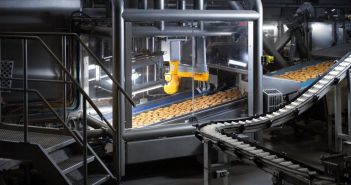
In early November, Phoenix Contact inaugurated a new power reliability and automation facility near Ho Chi Minh City staffed by approximately 100 employees. The site integrates production lines and logistics functions under a single roof, ensuring seamless coordination between manufacturing and distribution. Equipped with cutting-edge fabrication equipment, the plant employs lean production methods and automated handling systems. This dual-purpose hub is designed to meet rising demand in Southeast Asia.
Phoenix Contact invests â¬100M for 200,000m³ Blomberg logistics expansion
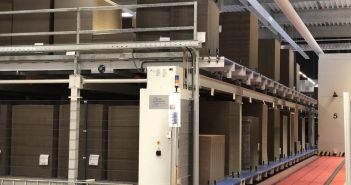
Phoenix Contact is investing more than 100 million euros to expand its logistics facility in Blomberg, increasing its internal volume by 200,000 cubic meters. Scheduled for completion in 2028, this infrastructure expansion reaffirms the companys dedication to its German operations. The enlarged warehouse will integrate advanced automation and optimized storage configurations, resulting in enhanced throughput, faster order fulfillment, streamlined material handling processes and improvements in supply chain speed and efficiency.
Phoenix Contact anticipates modest high-single-digit market recovery in 2024
For 2024, Phoenix Contact forecasts a moderate market recovery within the high single-digit percentage range, driven by targeted customer engagements and regional expansions. Aiming for 2025, the company has set a revenue goal of â¬3.3 billion, underpinned by disciplined cost management and selective capital investments. Despite recent declines, Phoenix Contact remains committed to its core automation and connectivity offerings, while bolstering operational efficiency through sustainable structural and comprehensive broader ongoing organizational enhancement.
Phoenix Contact leverages digitalization, AI, cybersecurity and energy resilience
Phoenix Contact actively pursues digital transformation, integrating artificial intelligence algorithms and fortifying cybersecurity measures to safeguard operational integrity. Concurrently, the company invests in energy resilience solutions that optimize power management and ensure uninterrupted production under diverse conditions. By delivering pragmatic, real-world applications, Phoenix Contact provides customer value through enhanced reliability, efficiency, and insights. Sustainability principles are embedded throughout every phase of the supply chain, reinforcing environmental stewardship and strategic resilience.
Phoenix Contact realigns internationally, boosting resilience, streamlining supply cycles
By shifting operations internationally, Phoenix Contact enhances operational resilience, accelerates supply cycles, and targets growth opportunities in key markets such as China, India, and the United States. Strategic investments in advanced facilities and automated infrastructure ensure cost-efficiency while supporting scalable production. This global alignment reduces logistical bottlenecks, strengthens innovation capacity through integrated technology deployments, and fosters competitive advantages under fluctuating regulatory and economic conditions, safeguarding sustainable performance, overall responsiveness globally.