
Qlar has inaugurated a pneumatic conveying test facility in Bangalore, India, featuring a 680-meter-long pipeline and covering 539 square meters. The center supports dense phase trials for metals, cement, and energy applications under industrial conditions. Clients can conduct evaluations of particle size distribution, bulk density, flowability, conveying pressure, air consumption, and throughput. This data empowers project planners to refine design parameters, reduce operational risk, and ensure reliable material handling performance.
Table of Contents: What awaits you in this article
Bangalore’s new 539-sqm test center powers pneumatic material testing
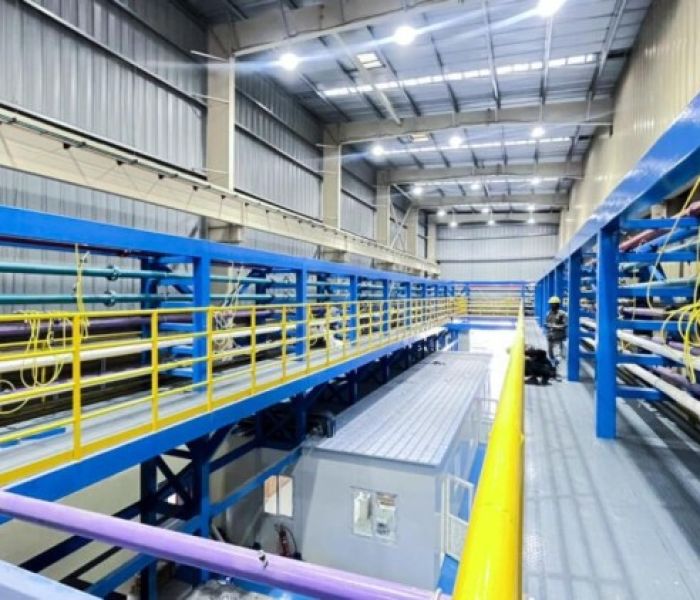
Pneumatische Förderung – Ein Blick ins neue Test Center (Foto: Qlar Europe GmbH)
In a 539-square-meter facility in Bangalore, users can conduct realistic pneumatic conveying tests on a range of materials, including ferrous and non-ferrous metals, cement, and fly ash. Featuring Asias first 680-meter-long conveying line, the center accommodates high-performance powders and chemical products under industry-standard conditions. Detailed evaluations of flow properties, pressure requirements, and energy consumption across varying feed rates ensure accurate comprehensive scale-up data, enabling optimized design and reliable project planning.
Particle Size, Density, Flow, Energy Use: Industrial Transport Data
At the testing facility, process parameters are evaluated to characterize dense phase material handling. Particle size distribution assessments identify granularity profiles while bulk density and flowability analyses reveal packing properties and movement tendencies. Simultaneously, air consumption and energy usage metrics quantify operational efficiency. Conveyance pressure and transfer speed measurements refine system design. These data points empower clients in the metal, cement, and energy sectors to engineer optimized pneumatic conveying solutions.
Industrial conveying tests determine material performance under varying conditions
Following initial laboratory characterization, the material proceeds through Qlars pilot-scale pneumatic conveying facility where it is subjected to controlled variations in pressure, feed rate, and aeration conditions. During these trials, Qlar measures the required conveying pressure, air consumption, material velocity, and maximum achievable throughput. This data enables engineers to validate pipeline design, optimize compressor selection, predict energy demands, and define operating envelopes for robust equipment sizing and project feasibility evaluation.
Qlars Bangalore Facility Ensures Early Project Security And Transparency

Rajesh Pathak, Managing Director Qlar India (Foto: Qlar Europe GmbH)
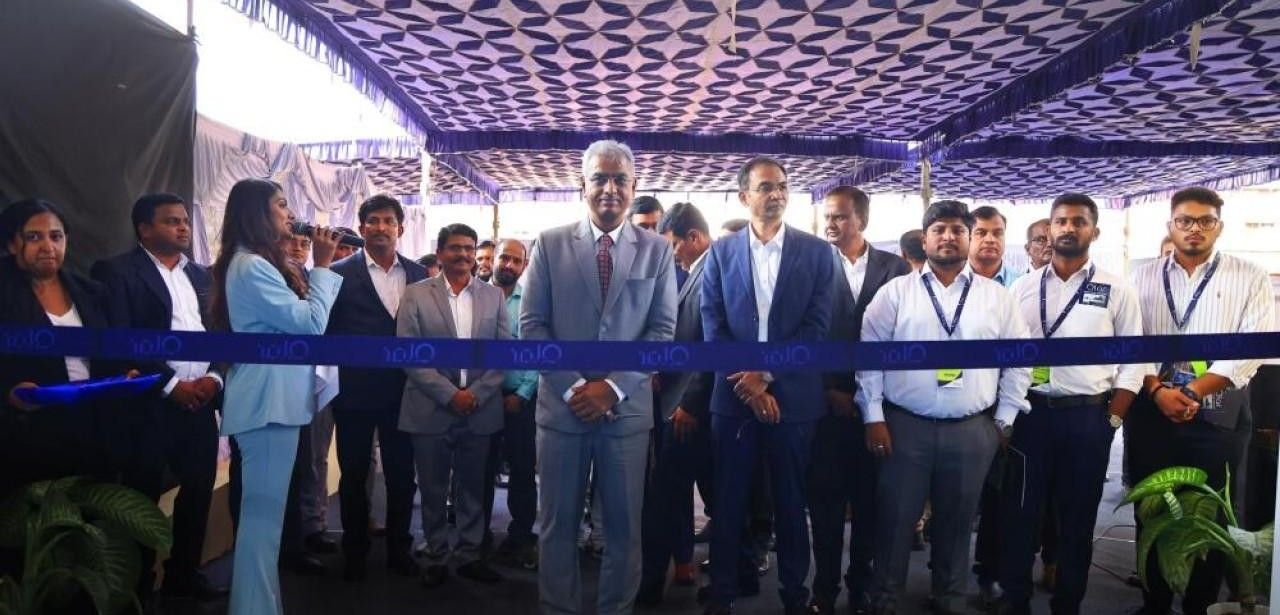
We have established a new testing facility that offers clients early project assurance and transparency, emphasizes Rajesh Pathak, Managing Director of Qlar India. This center meets the rising global demand for reliable pneumatic conveying data, adds Dr. Jörg Ulrich, CEO of the Qlar Group. As the only installation of its size and design in Asia, it enables extensive material transport trials, data verification, and process optimization under real operating conditions.
New Bangalore Test Center Generates Mechanical and Electrical Jobs
The facility opening generates new roles in mechanical and electrical engineering, bolstering workforce development. It also prioritizes enhancing pneumatic conveying efficiency through targeted testing with various material combinations. These trials facilitate accurate measurement and reduction of air consumption and energy use. By analyzing test data and optimizing process parameters, operators achieve sustainable energy savings and improved operational performance. This testing approach supports long-term resource efficiency and cost-effective industrial conveying solutions.
Qlar’s new Bangalore Test Center offers realistic pneumatic conveying data to improve project certainty. Clients access optimized system design guidance by validating operational parameters under industrial conditions. Comprehensive testing measures particle characteristics, pressure requirements, and energy consumption to enable accurate throughput predictions. Air demand and power efficiency analyses highlight cost savings and reduced emissions. With this facility, Qlar consolidates its leadership in material handling test infrastructure for demanding industries worldwide.