
Irlbacher unveils a new generation of heated flat glass at Light & Building, featuring individually customizable ceramic printed conductor tracks or laser-structured ITO coatings enable optical performance across various environments. These electrical heating elements regulate surface temperature to avoid condensation on outdoor camera lenses and sensor windows, delivering clear imaging conditions. Operating reliably from -40 °C to +80 °C, the system incorporates control to maintain minimal energy consumption ensuring visibility.
Table of Contents: What awaits you in this article
Irlbacher unveils heated flat glass protecting sensors from condensation
Irlbacher leverages its global leadership in flat glass processing to unveil a new generation of heated glass solutions, featuring either finely printed ceramic conductive tracks or laser-structured indium-tin oxide (ITO) coatings. Tailored to specific optical requirements, these advanced heating elements maintain surface temperatures above dew point, effectively eliminating condensation buildup on camera lenses, sensor windows, and touchscreen panels. Robust performance in extreme climates ensures reliable visibility and system integrity.
Preventing lens fogging on outdoor cameras through temperature control
In outdoor camera installations on rail vehicles, condensation compromises delicate lenses. Microscopic droplets forming on misted glass surfaces scatter light unpredictably, degrade image contrast, distort scenes, and can render optics partially or completely opaque. Preventing surface temperature from falling below the dew point stops beads of moisture from accumulating, ensuring that lenses remain clear and functional. Thermal control measures are essential to sustain performance in fluctuating humidity and temperature conditions.
Modular glass solutions combine ceramic-printed tracks and laser-structured ITO
Irlbachers modular solution kit incorporates two complementary heating technologies to address diverse sensor requirements. First, ultra-fine conductive tracks are printed directly onto the glass substrate using high-precision ceramic pigments that adhere permanently. Second, a transparent metallic indium-tin-oxide coating is laser-structured to form discrete heating elements while maintaining high optical clarity. Both methods can be customized to meet various transmission, resolution, and performance criteria, maximizing flexibility across multiple industrial applications environments.
Inner-side heating layer prevents condensation while conserving energy efficiently
The heating layer is consistently applied to the inner surface of the glass, where it remains fully protected from adverse environmental conditions. Integrated with sophisticated control algorithms, the system dynamically regulates temperature to maintain just above the dew point threshold. This precision prevents condensation while minimizing thermal stress on cameras or sensors. By avoiding unnecessary temperature increases, the solution enhances overall energy efficiency and contributes significantly to reliable sustainable operation.
Patented sub-200µm conductor tracks combine heating and lighting seamlessly
More than fifteen years ago, Irlbacher patented a global process for precisely depositing conductive tracks under 200 micrometers wide on glass substrates. This precision printing method delivers reliable heating performance and enables seamless integration of lighting elements within a single cover glass. Unveiled at Light & Building in Frankfurt, this innovation unites heating, illumination, and embedded control electronics in one module, simplifying assembly and enhancing clarity for critical industrial applications.
Irlbacher applies laser-structured ITO coating delivering ninety percent transparency
In applications demanding the utmost image fidelity, even micro-scale conductor paths can compromise optical clarity. To address this, Irlbacher employs an Indium Tin Oxide (ITO) coating with transmissivity reaching 90%, identical to that used in premium touchscreen panels. Precision laser patterning forms the heating network directly in the transparent layer, eliminating visible traces. The virtually undetectable structure maintains optical integrity, enabling crisp, distortion-free visuals across diverse environmental and operational conditions.
Comprehensive in-house fabrication ensures custom heating alignment around cameras
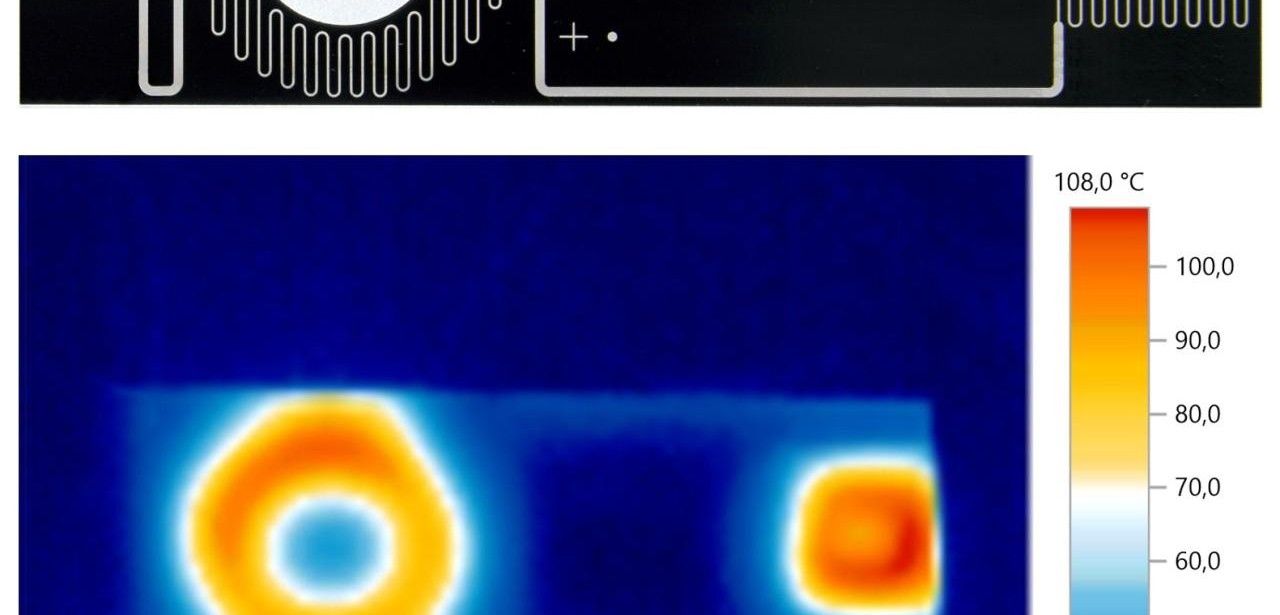
All manufacturing steps, from screen-printing of conductive traces to precision laser microstructuring, are executed entirely in-house. This comprehensive control over every production phase enables bespoke thermal glass solutions tailored precisely to each client’s specifications. Unheated regions can be omitted or arranged concentrically around a camera’s optical axis to preserve image fidelity. As a result, users exploit the resolution of their imaging systems without requiring expensive lenses with integrated heating elements.
Heating Variants Operate From â40 °C To +80 °C
Both heating variants operate reliably between minus forty and eighty degrees Celsius, delivering rapid thermal response to environmental conditions. Their compact design allows straightforward integration into existing control architectures, facilitating automated activation when temperatures approach dew point thresholds. This ensures windshields of suburban rail vehicles remain free of condensation during tunnel entry, while maintaining visibility within driver cabins. Additionally, they support clear optical performance for weather and barrier monitoring installations.
New heated flat glass prevents condensation with patented micro-conductors
Irlbachers new heated flat glass provides reliable condensation prevention by integrating ceramic-ink printed microheater circuits or laser-patterned ITO films with precise temperature control and intelligent regulation. The energy-efficient thermal system activates only near dew-point temperatures, preventing fog on camera lenses and sensor windows without overheating equipment. Fully manufactured in-house, these heating elements withstand ambient temperatures from â40 to +80 °C, ensuring crystal-clear visibility and dependable operation in extreme environmental conditions.