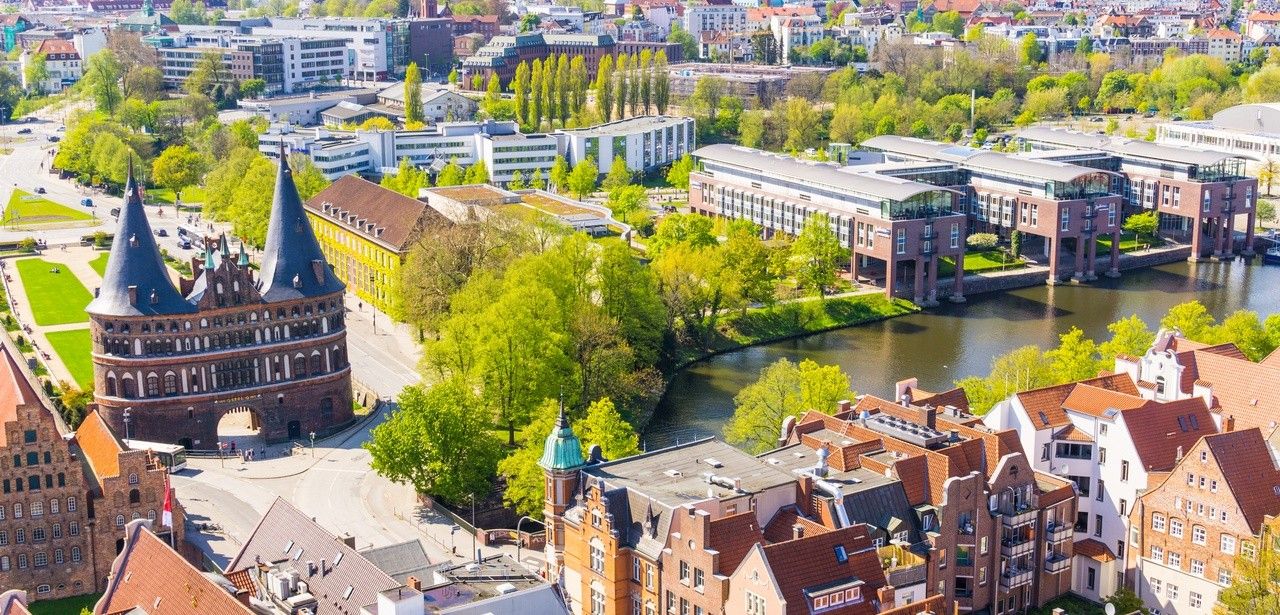
VIAA transforms Lübecks traffic infrastructure into a digitally connected system through the installation of cameras and sensors at four key intersections, enabling privacy-compliant real-time vehicle and pedestrian detection. A centralized traffic computer aggregates encrypted sensor data, analyzes current conditions, and dynamically adjusts signal timings. Backed by a EUR 5 million budget, including federal funding, the project strives to enhance traffic flow efficiency, minimize queue lengths, and reduce greenhouse emissions.
Table of Contents: What awaits you in this article
Elisabeth Fröhlich unveils anonymous traffic sensors at four intersections
Elisabeth Fröhlich, as project manager for VIAA in Lübeck, unveiled an advanced traffic monitoring camera developed by the Traffic Flow and Geo-Services unit. The installed sensor array captures anonymized counts and classifications of pedestrians, cyclists, private vehicles, and commercial traffic at four strategic junctions: Fackenburger Allee/Bei der Lohmühle, Schwartauer Allee/Bei der Lohmühle, Werner-Kock-Straße/Fackenburger Allee, and Berliner Allee/Kronsforder Allee, establishing robust input for continuous real-time traffic analysis, providing detailed performance metrics.
Privacy-compliant camera system encrypts traffic data for real-time monitoring
An innovative camera system captures the number and types of road users ensuring compliance with data protection regulations. Captured data is encrypted and transmitted to central traffic management server in real time. Recognition of traffic incidents enables dynamic signal timing adjustments at intersections to smooth flows. Continuous monitoring and analytics support proactive traffic planning, enabling planners to plan for congestion points and implement measures to optimize mobility and reduce delays.
Five Million Euro Traffic Project Funds Sustainable Management Foundations
Over two and a half years, the VIAA initiative will operate with a ?5 million budget, with 65 percent funded by the Federal Ministry of Transport. During this period, the project will establish technical infrastructure and organizational processes essential for sustainable, efficient traffic management. Activities encompass installing and maintaining sensor networks, as well as providing training programs for operational staff, ensuring that personnel acquire the skills to maximize system performance.
Lübeck connects traffic lights to central platform for analysis
Over time the City of Lübeck will progressively link all primary signalized intersections to its newly deployed traffic management computer, consolidating them within a data platform. This infrastructure continuously ingests and processes information on congestion, construction sites, and unpredictable traffic disruptions. By centralizing real-time data flows, the system delivers comprehensive insights into vehicular movements and incident trends, enabling coordinated adjustments and strategic planning for enhanced efficiency, safety, and impact mitigation.
New Traffic Computer Integrates Sensor Data With Signal Network
The new traffic computer serves as the core of operational traffic management, integrating sensor data streams with signal controllers to enable centralized control. Adaptive signal timing algorithms analyze real-time traffic volumes and flow patterns, adjusting green, red, and amber phases dynamically to alleviate congestion and minimize delays. Automated fault detection and alarm functions promptly identify malfunctions or communication errors, allowing maintenance teams to address issues swiftly and maintain optimal performance.
47 Traffic Signals Connected, 80 Targeted For Real-Time Control
Currently, 47 traffic signal controllers are interfaced with the central traffic management computer, enabling dynamic coordination based on live data streams. Over the remaining funding period, an additional 33 pivotal intersections will be brought online to reach a total of 80 integrated traffic lights. Existing legacy controllers will undergo hardware and firmware upgrades to support real-time communication protocols, ensuring seamless interaction between each traffic signal and the central computing unit.
Leveraging digital connectivity, real-time analysis, and traffic management, the VIAA initiative in Lübeck integrates privacy-compliant sensors and scalable IoT infrastructure to collect anonymized movement data at key intersections. A central traffic computer processes encrypted feeds, dynamically adjusting signal timings to optimize flow, minimize delays, and respond to incidents. This smart city deployment reduces emissions by smoothing vehicle progression, shortens wait times through algorithms, and lays a foundation for future expansion.