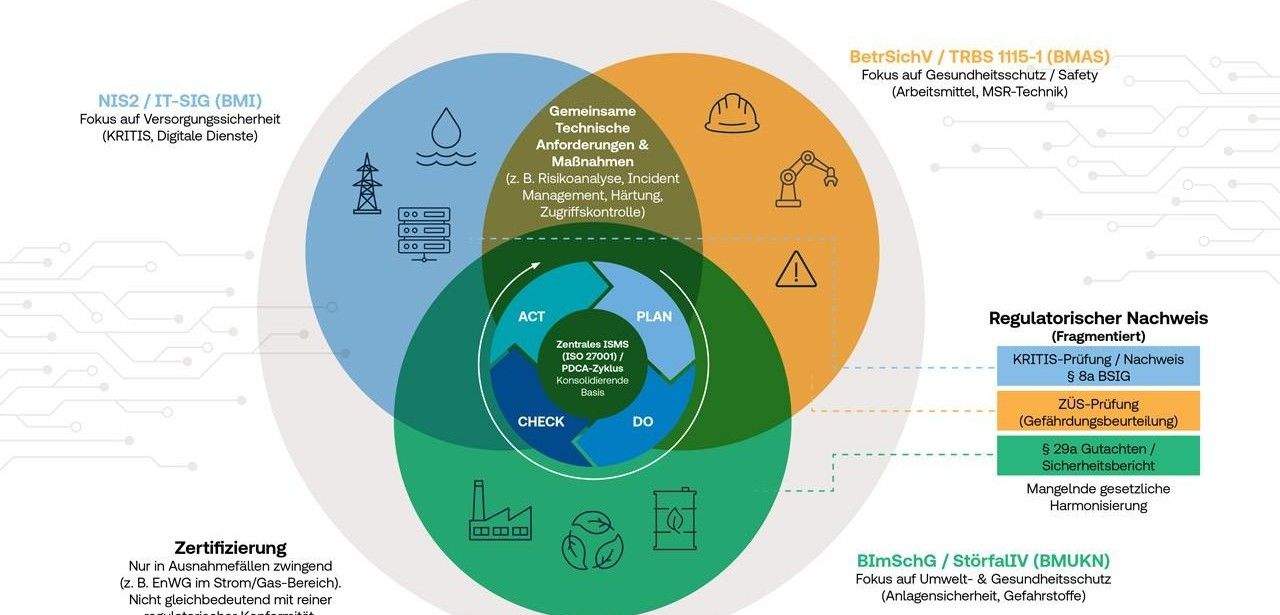
According to Bitkom, German businesses incur annual losses of approximately ?200 billion due to cyberattacks, underscoring that cybersecurity transcends specialist domains. The TÜV SÜD whitepaper defines and interrelates NIS2, the Industrial Safety and Operational Security Ordinances, ISO 27001, TRBS 1115-1, and IEC 62443. It demonstrates how organizations can adopt a consolidated PDCA-based management system, effectively streamlining compliance across multiple standards while optimizing risk control and operational resilience within industrial environments.
Table of Contents: What awaits you in this article
TÜV SÜD Whitepaper Defines NIS2 Seveso And Safety Requirements
The whitepaper introduces key regulatory frameworks governing industrial cybersecurity, including NIS2, Seveso Directive compliance, and operational safety regulations. It clearly defines each frameworks protection objectives, highlights overlapping requirements, and outlines specific evidentiary obligations. By referencing ISO 27001, TRBS 1115-1, and the KAS-51 guideline, it illustrates the practical relevance of each standard, compares implementation approaches, and clarifies where security controls converge or differ, enabling organizations to align their compliance strategies effectively.
PDCA Cycle Drives Integrated IT and OT Cybersecurity Management
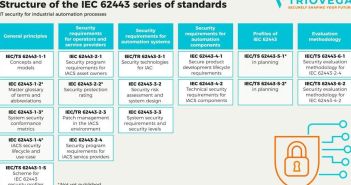
The whitepaper recommends adopting a PDCA cycle tailored to operational requirements, guiding organizations through planning, implementation, verification, and corrective actions for cybersecurity management. ISO 27001 provides a solid foundation that addresses both traditional information security measures and specific operational technology controls. By incorporating the IEC 62443 series, companies can integrate industry-specific cybersecurity requirements directly into a unified management system. This streamlined approach enables central oversight and continuous improvement of security.
Comprehensive framework analysis enables efficient demonstration of regulatory compliance
By evaluating multiple regulatory frameworks as an integrated concept, organizations gain a streamlined approach to demonstrating compliance with statutory requirements. Enterprises holding ISO 27001 certification for their information security management system can perform a gap analysis to pinpoint missing elements and generate supplementary documentation in accordance with TRBS 1115-1 or KAS-51 guidelines. This structured method significantly cuts administrative overhead and ensures transparent compliance reporting to internal stakeholders and external authorities.
Whitepaper outlines nine pragmatic steps for cybersecurity compliance implementation
The whitepaper offers practical illustrations of implementing cybersecurity measures at the intersection of regulatory frameworks and certification standards. It outlines strategies for organizations to unify documentation with minimal additional effort, ensuring demonstrable compliance to oversight bodies. Detailed definitions of core concepts and targeted advice on interpreting intricate requirements equip security professionals with actionable insights. These structured explanations enhance everyday operational security practices, streamline compliance processes, and reduce overall administrative complexity.
Marcus Geiger Integrates Expertise to Boost Security and Profitability
With his extensive cyber security expertise, Marcus Geiger, head of the Cybersecurity Competence Center at TÜV SÜD Industrial Service, underpins the whitepaper. Drawing from industrial consulting engagements and insights from specialist conferences, he ensures the content reflects real-world challenges. Geiger emphasizes that implementing a unified management system not only bolsters operational security by harmonizing processes but also drives long-term economic benefits through reduced overhead and streamlined compliance across regulatory frameworks.
The TÜV SÜD whitepaper equips organizations with a roadmap for integrating NIS2, the Seveso and Industrial Safety Regulations into a unified compliance framework. By leveraging a Plan-Do-Check-Act cycle anchored in ISO 27001 and supplemented with IEC 62443 standards, companies can systematically identify and mitigate cybersecurity risks. This approach streamlines documentation, reduces administrative overhead, and enhances audit transparency. Ultimately, it reinforces industrial cyber resilience while optimizing resource allocation and sustaining compliance.