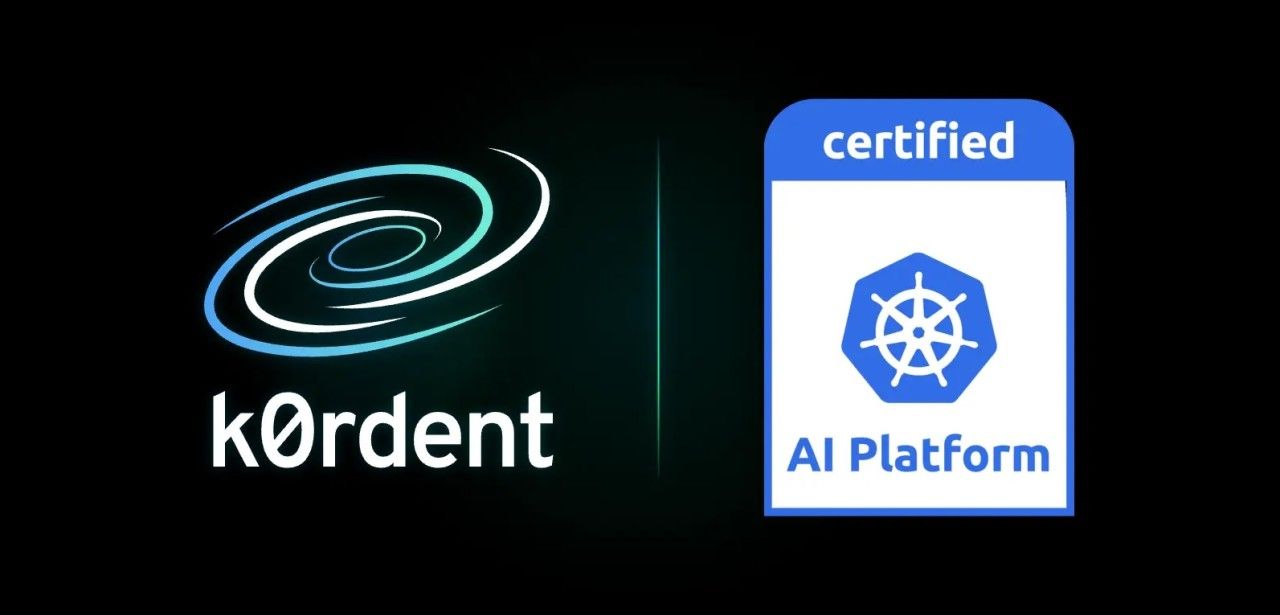
Mirantiss k0s and k0rdent platforms have achieved CNCF Certified Kubernetes AI Conformance for Kubernetes version 1.35, validating their ability to handle AI workflows. This certification confirms reliable support for machine learning training, inference, GPU orchestration, and agent-based workflows on upstream Kubernetes. It applies to multi-cluster and fleet scenarios, ensuring GPU resource management. Enterprises can deploy open infrastructure with reproducible conformance tests and avoid proprietary dependencies for global seamless AI operations.
Table of Contents: What awaits you in this article
Mirantis k0s and k0rdent receive CNCF AI Conformance Certification
Mirantis announced that its Kubernetes-native offerings, k0s and k0rdent, achieved CNCF Certified Kubernetes AI Conformance for version 1.35. Issued by the Cloud Native Computing Foundation, this validation confirms both distributions can manage AI workloads, including training pipelines, inference tasks, GPU resource orchestration, and distributed machine learning models on upstream Kubernetes. By eliminating proprietary dependencies, k0s and k0rdent deliver infrastructure, enabling enterprises to deploy scalable, vendor-neutral AI solutions across multi-cluster environments.
CNCF AI Conformance Program Mandates Reproducible Kubernetes AI Tests
The CNCF Kubernetes AI Conformance Program defines a core set of required capabilities for AI workloads. It mandates publicly accessible, repeatable testing procedures to ensure reliable validation. Mirantis has published complete test submissions for k0s and k0rdent within their documentation. This transparent publication enables organizations to examine every certification step, reproduce the validation process independently, and confirm their platforms compliance with upstream Kubernetes standards without relying on proprietary verification methods.
Secure GPU Allocation Driver Management Via Kubernetes Gateway API
Each solution provides secure GPU resource allocation, automatically installs necessary drivers, and oversees their lifecycle without manual effort. Additionally, inference and model-serving traffic is directed through the Kubernetes Gateway API, ensuring streamlined connectivity. These capabilities facilitate reliable coordination of GPU-intensive workloads across clusters, delivering consistent performance and scaling. By eliminating proprietary networking tools and reducing human intervention, the platforms simplify distributed AI operations and maintain adherence to open Kubernetes standards.
Mirantis Enables Gang Scheduling For Synchronous Training Across Clusters
Mirantis enables gang-scheduling to coordinate synchronous training workloads across multiple GPUs and clusters, ensuring tasks launch concurrently while resources distribute evenly. Administrators can dynamically adjust cluster capacity and workload assignments on real-time GPU demand. This elastic scalability accommodates environments from single-node development setups to large-scale, geographically distributed AI farms. By aligning GPU supply with computational needs, Mirantis maximizes throughput, reduces idle GPU time, and enhances overall training performance and utilization efficiency.
k0s and k0rdent deliver GPU metrics, ensure Kubernetes stability
Mirantis k0s and k0rdent platforms continuously collect detailed GPU performance metrics, including utilization, memory consumption, temperature, and throughput. By offering time-slicing capabilities, they enable GPU sharing across multiple workloads, optimizing overall infrastructure utilization and reducing idle cycles. Additionally, self-healing charts deploy modern operators such as KubeRay, which leverage Kubernetes native recovery and scaling mechanisms automatically. This integrated stack ensures resilient, scalable GPU orchestration and transparent resource monitoring for distributed AI workloads.
k0s consolidates entire Kubernetes control plane into one binary
By packaging the entire Kubernetes control plane into one streamlined binary, k0s eliminates operational complexity by reducing the number of separate components and dependencies. This unified distribution preserves full compatibility with upstream Kubernetes APIs and features while simplifying deployment processes. Platform teams can bring clusters online more rapidly, spend less time coordinating services, and focus on workloads rather than managing infrastructure components. Overall, k0s accelerates rollout and reduces administrative overhead.
k0rdent extends CNCF compliance with advanced AI scheduling features
k0rdent extends CNCF baseline requirements by integrating advanced AI capabilities that streamline enterprise-scale orchestration. It introduces sophisticated scheduling algorithms to optimize GPU and CPU resource allocation, robust multi-tenancy controls enforcing isolation and policies across teams, and dynamic fleet management features automating node provisioning and health monitoring. These enhancements empower platform operators to seamlessly deploy, scale, and maintain mission-critical AI infrastructures reliably, ensuring high utilization, security, and resilience across distributed environments.
Certification validates Mirantiss full-stack AI on open upstream Kubernetes
Randy Bias, Mirantis Vice President of Open Source Strategy and Technology, emphasizes that the certification validates Mirantiss full-stack AI operations running on open, upstream Kubernetes infrastructure. He highlights that this alignment with standard Kubernetes builds reinforces their commitment to transparency, interoperability, and innovation. CNCF CTO Chris Aniszczyk adds that public, community-driven conformance testing establishes a reliable foundation for responsibly scaling AI agents and distributed GPU workloads without proprietary vendor lock-in.
Mirantis k0s and k0rdent deliver a turnkey certified Kubernetes platform tailored for AI workloads, enabling deployment of training and inference pipelines. Integrated GPU orchestration automates driver installation, resource allocation, and scheduling, ensuring consistent performance at scale. Reproducible conformance validation confirms alignment with upstream standards, while a streamlined architecture minimizes operational complexity. An open upstream foundation prevents vendor lock-in, offering flexible extensibility and a future-proof infrastructure for distributed machine learning deployments.