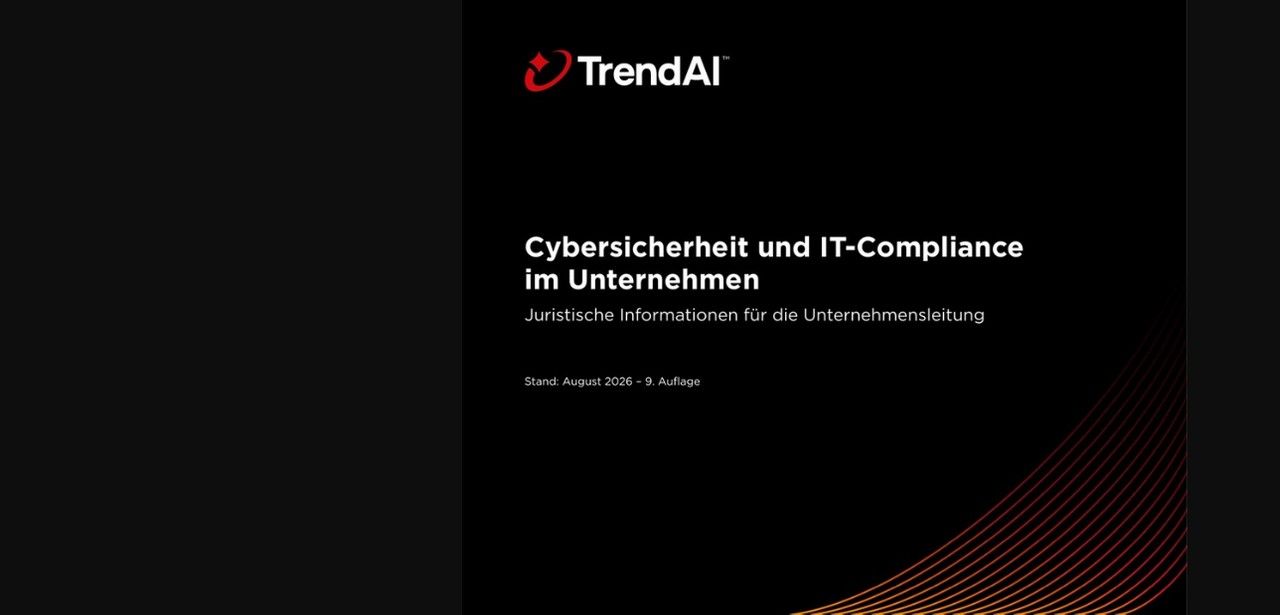
TrendAI, the enterprise cybersecurity division of Trend Micro, has released its ninth edition of the legal guide ‘Cybersecurity and IT Compliance’ in Garching near Munich. Aimed at IT managers and executive boards, this concise manual summarizes key directives including the EU AI Act, German NIS2 implementation, and the Cyber Resilience Act. It equips organizations with actionable steps to interpret regulatory obligations effectively, integrate compliance workflows, and reinforce their security architecture.
Table of Contents: What awaits you in this article
TrendAI’s Updated Guide Explains EU AI Act, NIS2, Resilience
TrendAI(TM) has updated its legal guide to reflect current regulations and offers an edition that thoroughly examines the EU AI Act, the German NIS2 implementation, and the EU Cyber Resilience Act. This document equips IT leaders and board members with clear explanations of risk assessment frameworks, data quality standards, and accountability definitions. It includes practical recommendations to integrate compliance measures into existing cybersecurity architectures, ensuring precise alignment with legal requirements.
EU AI Regulation Effective August 2026 Mandates Risk Management
Since August 2, 2026, the EU AI Regulation has become enforceable in the EU, introducing a risk-based model. TrendAI(TM) explains the ban on social scoring and unauthorized facial image processing. It details strict obligations for high-risk AI systems in HR and credit assessment, risk management, data quality, and human oversight. Providers and operators are unequivocally defined, and non-compliance incurs fines up to ?35 million or seven percent of annual turnover.
NIS2 Implementation Effective December 6 2025 Expands BSI Scope
Effective on December 6, 2025, Germanys NIS2 Implementation Act broadens the scope of the Federal Office for Information Security Act to roughly 30,000 entities across energy, finance, healthcare, digital infrastructure, and industrial sectors. Two size-based categories?organizations with at least 250 employees or those with 50 employees and significant annual turnover?are now subject to mandatory incident reporting, specified security measures, and defined reporting procedures, all taking effect immediately without transitional periods.
EU Cyber Resilience mandates security requirements for connected devices
The EU Cyber Resilience Act, effective December 11, 2027, establishes uniform cybersecurity requirements for connected products, encompassing hardware devices, embedded software, and integrated systems. Manufacturers are obligated to implement secure default configurations, continuously identify and remediate vulnerabilities throughout the product lifecycle, maintain a comprehensive Software Bill of Materials (SBOM). Only after fulfilling these prerequisites may products receive CE marking. Security incident reporting timelines align with those specified under the NIS2 Directive.
Dr. Stögmüller provides free guide with practical templates, checklists
Dr. Thomas Stögmüller, a certified IT law attorney, authored the guide and enriched it with practical examples to illustrate compliance scenarios. Available for free download, the guide includes editable templates, comprehensive checklists, and curated links to official regulatory sources. By leveraging these resources, CISOs and compliance teams can systematically assess their current security posture, identify gaps beyond legal obligations, and devise targeted measures to strengthen resilience against emerging cybersecurity risks.
TrendAI(TM)s guide empowers organizations to navigate complex regulatory environments by consolidating critical requirements into an accessible format. It delivers structured overviews of essential standards, presents implementation frameworks, and reduces liability exposure. By equipping IT leadership and CISOs with comprehensive checklists and guidelines, actionable insights, it streamlines compliance efforts. The guide emphasizes strategies for strengthening cybersecurity beyond legal obligations, addressing emerging and novel AI-driven threats through a holistic risk management approach.