Individuals leave digital assets such as email accounts, cloud storage, social media profiles, online banking credentials, cryptocurrency wallets. Traditional wills address tangible assets like property investments but often neglect online credentials, leaving heirs unable to access digital holdings. This article explores which digital items belong in estate plans, outlines related legal obstacles, advocates structured documentation via password managers, powers of attorney, clear access protocols to preserve clarity, security for successors.
Table of Contents: What awaits you in this article
Wills Often Overlook Digital Assets Causing Inheritance Complications Today
Estate planning traditionally emphasizes physical properties, securities holdings, and equity positions while often neglecting digital assets. This oversight includes email accounts, cloud-based file repositories, domain registrations, and social media profiles. Despite personal reliance, these digital holdings remain excluded from many testamentary directives. Consequently, beneficiaries may face inaccessible data, irretrievable content, and legal complications during probate. Modern succession strategies must integrate comprehensive inventories of online credentials to safeguard all estate components.
Beyond social media: Comprehensive list of digital inheritance assets
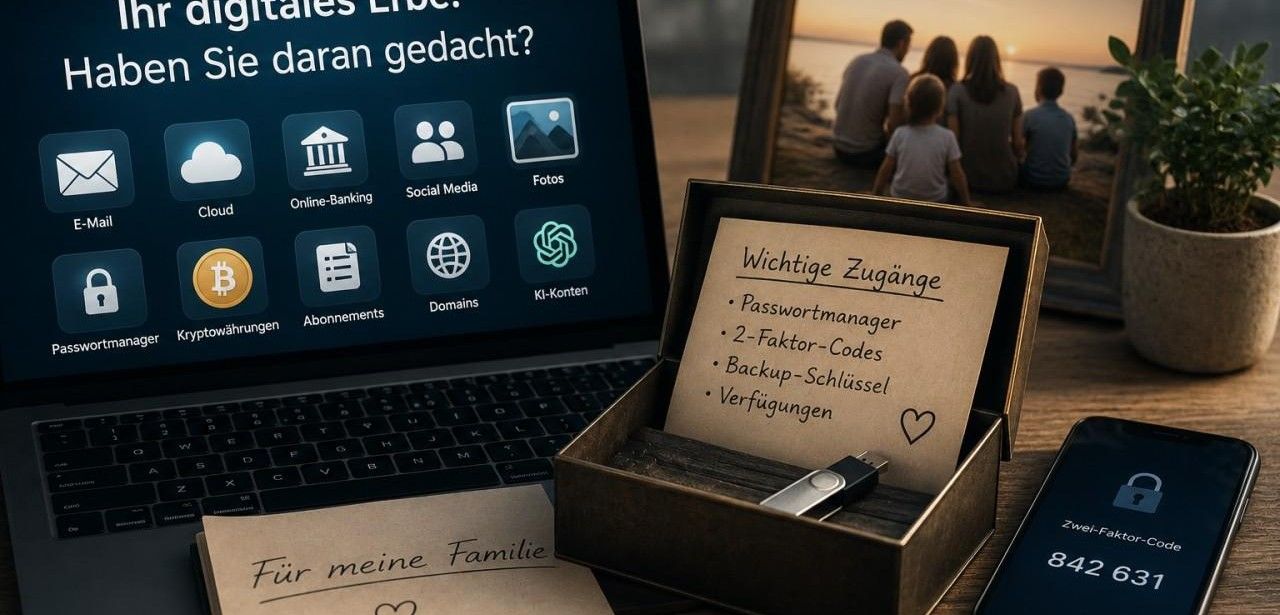
Digital assets encompass more than social media profiles like Facebook or Instagram. They also include online banking accounts, securities portfolios, cryptocurrencies, cloud storage housing photos and documents, domain registrations, streaming service subscriptions, digital memberships, and professional software credentials. Business owners rely on web hosting, e-commerce platforms, license management systems, and customer portals. Including these elements in estate planning ensures a comprehensive overview of digital wealth, facilitating smooth inheritance and access.
Federal Court: digital accounts inheritable, heirs lack necessary credentials
Following the decision by the Federal Court of Justice (Az. III ZR 183/17), digital user accounts are now classified as inheritable assets under German law. While heirs automatically assume the decedents legal position regarding these accounts, they frequently lack the necessary credentialsâbe it passwords, PINs, or private keysâto gain entry. Furthermore, a formal certificate of inheritance cannot bypass modern security measures such as two-factor authentication or recover lost codes generated by authenticator apps.
Lost Crypto Private Key Blocks Estate Access For Heirs
Losing the sole private key to a cryptocurrency wallet permanently locks digital assets, rendering them completely inaccessible. Even if some credentials remain, missing authentication factors such as one-time PINs or authenticator app codes can block heirs from gaining entry. Furthermore, hardware failuresâlike a smartphone locked by a forgotten passcodeâcompound the problem. As a result, beneficiaries cannot legally and securely access the decedents accounts or retrieve any funds without original credentials.
Lack of Access to Digital Accounts Halts Business Continuity
In many businesses, critical digital assets such as websites, hosting agreements, cloud services, email inboxes, and social media profiles are managed by a single individual. If that person passes away without access transferred, operational workflows can halt instantly. Projects under development may stall indefinitely, supplier relationships disrupt, and customer support channels collapse. Sudden inaccessibility of credentials can leave employees and stakeholders powerless to maintain daily operations, causing financial losses and reputational damage.
Create digital asset inventory, update credentials, simplify heir access
Effective digital management starts with a comprehensive inventory of every online account, cloud storage and cryptocurrency wallet. Critical credentials must be cataloged in a reliable password manager to prevent unauthorized exposure. Incorporate instructions regarding inheritance of digital assets within your will or through legally binding powers of attorney. Schedule regular reviews and refresh authentication tokens, ensuring two-factor devices remain accessible. Clearly designate authorized representatives with defined privileges, guaranteeing heir access.
Digital Assets Increase Value; Ignoring Them Risks Losing Access
With advancing digitalization, the economic value of online accounts, domain names, and virtual assets has grown significantly. Neglecting these holdings can result in stranded resources that heirs or stakeholders cannot access without elaborate procedures. Platforms secured by complex authentication, private keys, or distributed credentials may lock away substantial wealth indefinitely. A structured approach to documenting, managing, and transferring digital assets can prevent costly recovery efforts and ensure seamless asset inheritance.
Implementing an early inheritance plan for digital assets ensures legal clarity while facilitating practical access for beneficiaries. By precisely recording passwords, private keys, and two-factor authentication methods within power-of-attorney documents, executors can securely manage online accounts, cryptocurrency wallets, and storage. This strategy prevents access delays or legal ambiguities after death, integrating the digital estate into broader succession planning. Consequently, heirs avoid procedural hurdles and safeguard personal and financial digital assets.