
Infineon Technologies has opened a combined office and laboratory facility in Warstein to streamline development of power semiconductor modules. The building provides modern workplaces for approximately 350 employees and includes 1,200 square metres of laboratory space. Its integrated capabilities cover validation, material analysis, and application-oriented testing. The resulting components are intended to improve energy efficiency and operational reliability in connected industrial equipment, mobility systems, and energy infrastructure deployed worldwide effectively.
Table of Contents: What awaits you in this article
Infineon Opens 10,200-Square-Meter Warstein Hub for Research and Offices
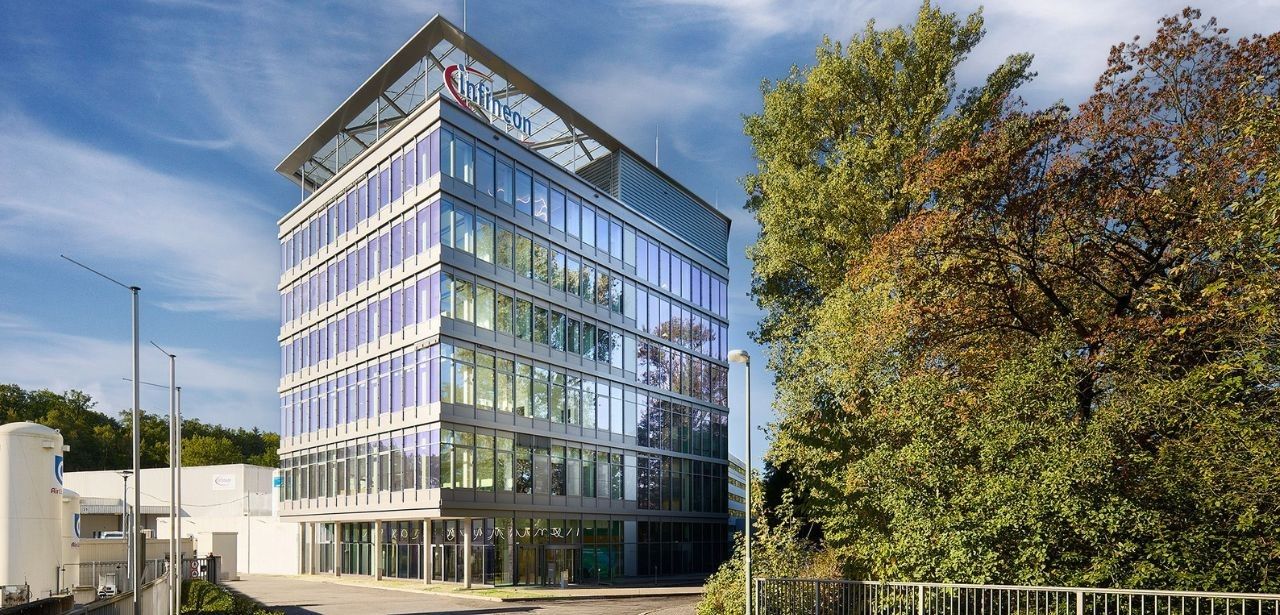
The new building at Infineons Warstein innovation site provides approximately 10,200 square metres of gross floor area and consolidates research, development, laboratory operations, and office workplaces in one location. It also includes meeting rooms, creative spaces, collaboration and social areas, an interactive showroom, and a cafeteria. The integrated layout is designed to support direct exchange between technical and administrative functions. Around 350 employees are expected to move into the facility soon.
Infineon Warstein Building Realized Through GARBE and BC Partners
The building was delivered through a collaboration between Infineon and project developer and investor GARBE Institutional Capital. Planning and execution were aligned with Infineons operational requirements as the future tenant. GARBE Institutional Capital and BC Partners Real Estate provided investment in the mid double digit million euro range. The new facility reinforces Warsteins role within Infineons international manufacturing network and expands the sites capacity as a location for innovation activities.
Three-Floor Laboratory Hub Accelerates Power Module Development and Collaboration
The buildings central technical infrastructure comprises approximately 1,200 square metres of laboratory space distributed across three floors. Extensive glass facades provide daylight and create visual links between laboratories and adjacent office areas. This layout places development specialists close to relevant departments, enabling faster coordination. For complex power semiconductor modules, the combination of design, validation and application testing in closely connected workspaces is intended to reduce development cycles and improve decisions.
Infineon Mechanical Lab Advances Products Through Precise Real-World Testing
At Infineons mechanical validation and evaluation laboratory, product development is supported from the initial concept through qualification for volume production. High-precision measurement equipment, three-dimensional scanners, and mechanical stress tests enable engineers to identify design weaknesses, refine module structures, and verify performance under representative operating conditions. Sensitive instruments are installed on a separately founded floor slab, which limits the transfer of building vibrations and helps ensure repeatable and reliable measurement results.
Material and Electrical Labs Advance Robust Power Semiconductor Design
Infineons materials technology laboratory examines material properties to establish a reliable basis for durable power semiconductor products. Its electrical validation laboratory evaluates and refines devices made from silicon, silicon carbide, and gallium nitride. Engineers focus on switching performance and thermal behavior, because both characteristics determine conversion losses, component size, and operating life. The work supports efficient, compact power electronics for connected equipment, industrial systems, and modern energy infrastructures worldwide applications.
Laboratories evaluate power modules under realistic converter operating conditions
Additional laboratories evaluate power semiconductor modules under operating conditions that closely replicate converter system use. A motor test bench supplements these facilities by enabling detailed investigation of power electronics for electric vehicles. The laboratories are assigned to Green Energy Modules & Systems within the Power Systems division and to the Automotive division. Their purpose is to link development activities with dependable customer deployment through practical verification and application-oriented testing processes.
Infineon building combines timber hybrid design, heat pumps, rooftop photovoltaics
Infineon designed the Warstein facility with sustainability integrated into its construction and operational purpose. A timber hybrid structure reduces reliance on conventional building materials, while an efficient heat pump system supplies climate control. Rooftop photovoltaic generation contributes renewable electricity. The site also develops power semiconductor modules for wind and solar installations, battery storage, industrial drives, rail vehicles, and electric vehicles, linking resource-conscious infrastructure with technologies that support electrification across networks.
AI Data Center Growth Drives Warstein Power Semiconductor Demand
Expansion of artificial intelligence data centers creates additional market potential for power semiconductor solutions developed in Warstein. Their electricity demand requires efficient conversion, distribution, and control across the energy chain from generation and transmission to final consumption. Powerful and thermally resilient modules provide a key foundation for IoT infrastructure, where dependable sensors, connected drives, and intelligent power distribution must operate efficiently, reliably, and under changing loads and demanding environmental conditions.
Infineons new Warstein facility significantly expands its development infrastructure for power semiconductor modules. Consolidated testing, validation, and material analysis capabilities enable teams to examine designs more efficiently throughout development. The close physical connection between laboratories and specialist departments supports coordination and shorter feedback loops. Application-oriented test environments also allow modules to be evaluated under realistic operating conditions. This foundation can improve efficiency, reliability, and validation for IoT, energy, and mobility applications.