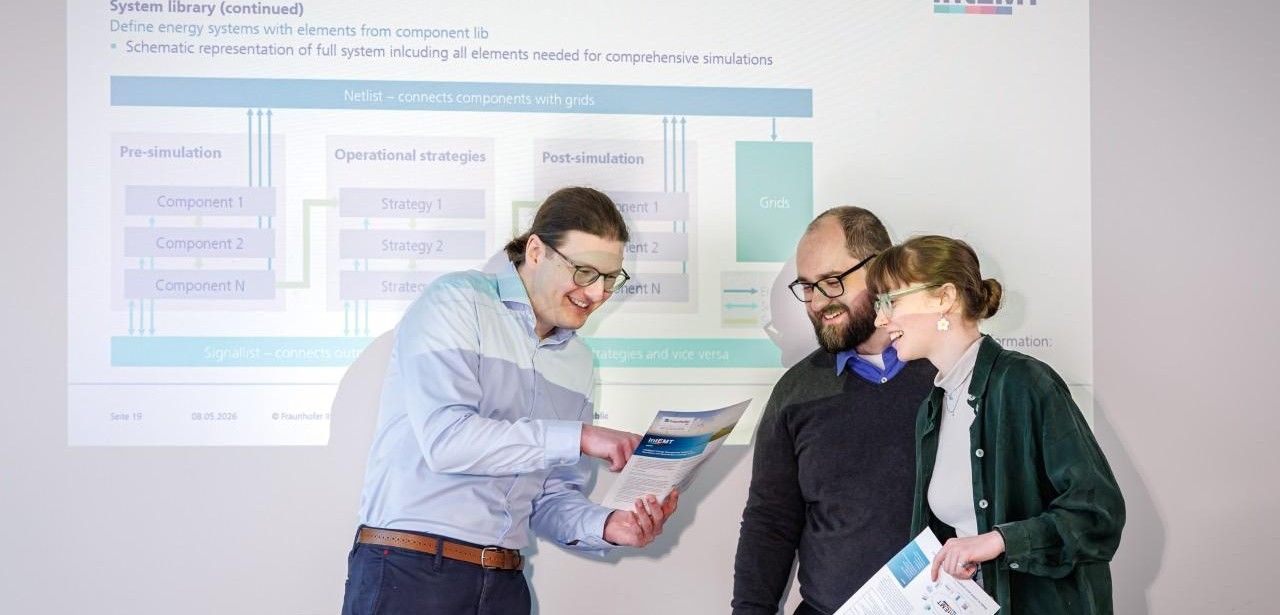
The intEMT(R) software toolbox developed by Fraunhofer IISB serves as a comprehensive framework for intelligent energy management, integrating modular Python-based components to digitally represent, simulate, and optimize diverse energy networks. Through the creation of digital twins and use of predictive algorithms, it reveals synergies among electrical, thermal, cooling, and mobility subsystems. Operators can perform non-intrusive analyses to uncover optimization opportunities and evaluate investment scenarios with robust cost-benefit and environmental metrics.
Table of Contents: What awaits you in this article
Non-Invasive Digital Twin Approach for Holistic Energy System Optimization
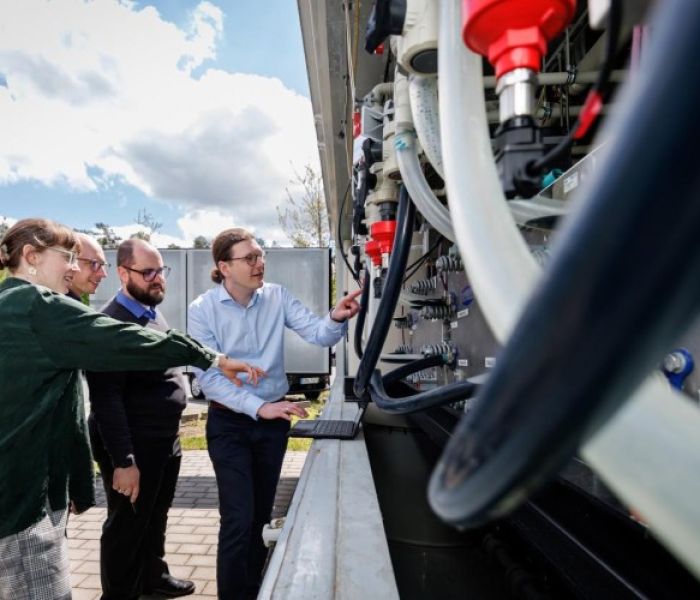
Durch den abstrakten Modellierungsansatz in intEMT(R) lassen sich (Foto: Daniel Karmann. Fraunhofer IISB)
Companies and urban districts increasingly contend with interwoven energy vectors?electricity, heat, cooling, mobility, and storage?that behave as a unified system. Even minor adjustments in one domain risk cascading disruptions elsewhere. The intEMT(R) toolbox delivers a non-invasive framework to model system configurations, simulate operating scenarios, and evaluate infrastructure expansion. Leveraging digital twins and predictive algorithms, it empowers stakeholders to quantify performance, pinpoint efficiency gains, and mitigate risks in investment and planning.
Five Python Libraries Enable Energy System Modeling And Optimization
intEMT(R) integrates five modular Python libraries that function standalone or in combination. The first library models abstract grid interfaces, energy converters and storage units. The second simulates interactions within complex system networks. A third assists in technical and economic sizing of storage components and generation installations. The remaining two libraries coordinate operational strategies and manage predictive control, extending through an economic model predictive control layer in real time seamlessly integrated.
Holistic Energy Analysis Reveals Optimization Potential Across Existing Infrastructure
By employing comprehensive system-wide analysis, optimization opportunities within existing energy infrastructures are revealed. Non-invasive assessments pinpoint key levers for peak demand reduction, increased self-consumption, and predictive energy flow optimization. This holistic approach enables simultaneous achievement of economic objectives while furnishing robust calculations for long-term investment planning. Stakeholders can evaluate scenarios, balancing cost efficiency, carbon footprint reduction, and operational resilience to make informed decisions aligned with strategic sustainability and profitability goals.
Digital Twin of Real Energy Systems Enables Scenario Analysis

Mit seinem modularen Ansatz ist intEMT(R) flexibel auf verschiedene (Foto: Daniel Karmann. Fraunhofer IISB)
The intEMT toolbox generates a digital twin of actual energy systems based on existing operational data. Through scenario-based comparisons of diverse plant configurations, load patterns, and weather forecasts, it evaluates optimal operational strategies. The Economic Model Predictive Control (eMPC) mechanism proactively optimizes temporal energy distribution against economic and environmental objectives in real time. This enables robust and informed decisions for peak shaving, self-consumption enhancement, and long-term investment planning under uncertainty.
Toolbox Enables Peak Load Reduction With Electrical, Thermal, Storage
The toolbox enables targeted peak load reduction by coordinating electrical and thermal assets in real time, adjusting operational setpoints and utilizing predictive forecasts to prevent grid overloads. Through integration of renewable energy sources and storage units, it enhances onsite self-consumption, reducing reliance on external supplies and optimizing resource utilization. Day-ahead scheduling algorithms forecast demand and renewable output, while advanced charging infrastructure management ensures efficient electric vehicle integration and grid-friendly operation.
intEMT(R) powers diverse energy projects with continuous development feedback
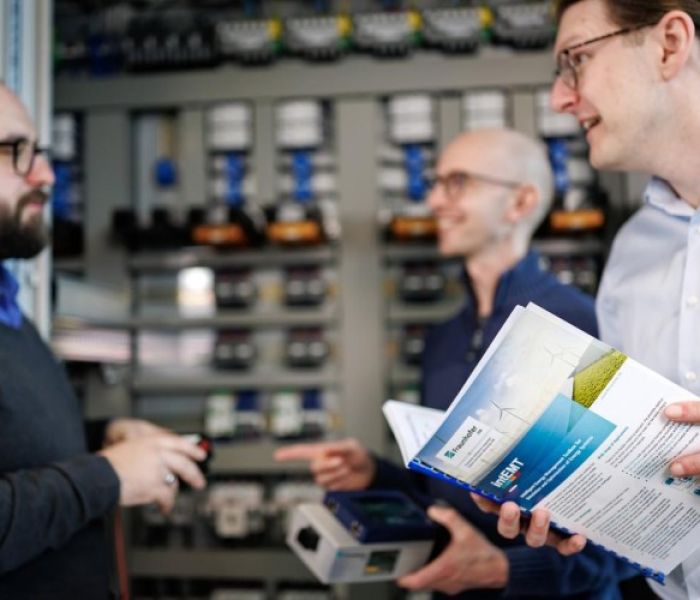
Resiliente und auch Gleichstrom-dominierte lokale (Foto: Daniel Karmann. Fraunhofer IISB)
intEMT(R) is applied in a diverse portfolio of initiatives, including the BMWE-funded REMBup real-world laboratory at NürnbergMesse, the Flexship project for hybrid vessels, GreenICT research, ProEnergie energy management developments, and the Wärmenetze 4.0 district heating network upgrade. Continuous incorporation of operational insights into the toolboxs evolution ensures constant enhancement and validation. These field-tested contributions confirm the platforms adaptability and effectiveness across academic studies, industrial applications, and integrated neighborhood-scale energy infrastructures.
Fraunhofer IISBs intEMT(R) toolbox delivers a comprehensive intelligent energy management platform for utilities and professionals, combining modular components, digital twin technology, and predictive algorithms. The solution enhances operational efficiency by simulating complex interactions between power, heat, cooling, and mobility systems. Users can evaluate investment scenarios with rigorous cost-benefit analysis, forecast performance under varying conditions, and optimize energy flows to decrease greenhouse gas emissions, improve economic outcomes, and reinforce infrastructure resilience.