
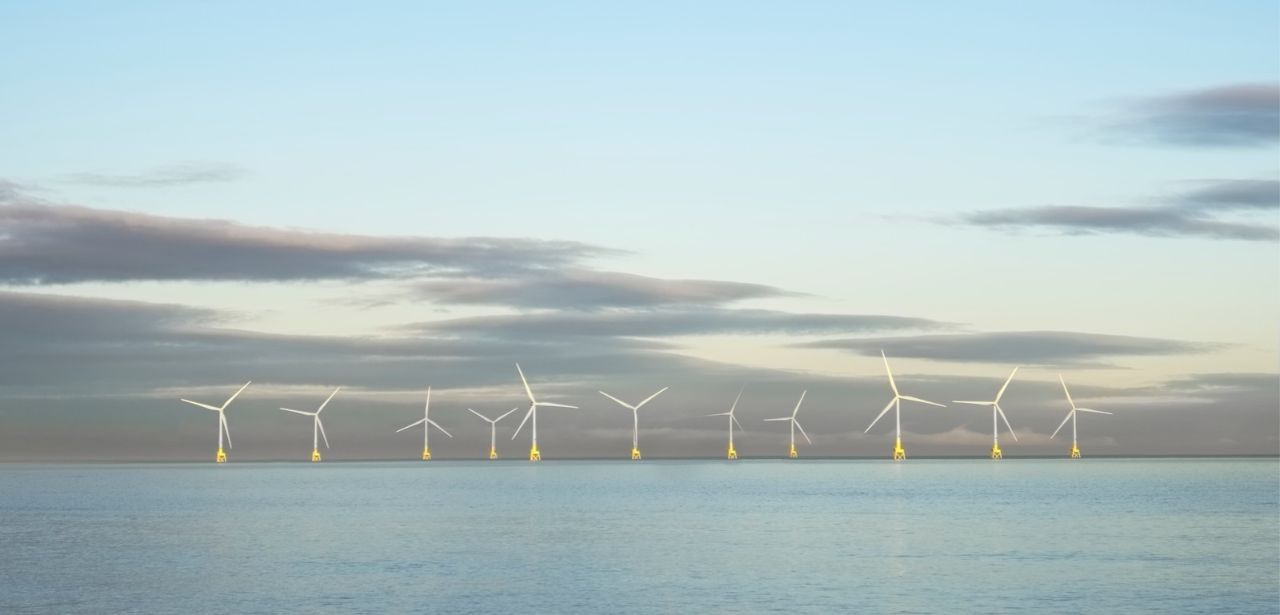
RWE and KKR are developing Vanguard West and Vanguard East as major offshore wind projects in the British North Sea. Scheduled for operation in 2030, the two wind farms will provide a combined 2.8 gigawatts, equivalent to the electricity needs of about three million households. Their delivery relies on a joint venture, the United Kingdoms largest offshore wind project financing, and coordinated grid infrastructure supporting construction, connection, and long-term revenues.
Table of Contents: What awaits you in this article
Vanguard Projects Deliver 2.8 Gigawatts for Britain by 2030
Vanguard West and Vanguard East are being developed in the East Anglia region, between 50 and 80 kilometres off Norfolks coast. Each offshore wind farm will have an installed capacity of 1.4 gigawatts, creating a combined 2.8 gigawatts of generation capacity. Once both projects enter full operation in 2030, their output is expected to supply the equivalent of three million British households, supporting domestic generation and Britains security of supply.
RWE and KKR form equal Vanguard offshore wind partnership
KKR has acquired a 50 percent interest in each of the Vanguard West and Vanguard East offshore wind projects, establishing equal joint ventures with RWE. The partnership combines RWEs offshore development, construction, and operating experience with KKRs long term investment capacity and infrastructure expertise. Both shareholders contribute equity to the projects. Acting for the joint ventures, RWE leads delivery across development and construction and will manage operations after commissioning thereafter.
UK Offshore Wind Secures Record £12 Billion Project Financing
The offshore wind farms and their associated grid infrastructure require investment of approximately £12 billion. A group of 35 international lenders has arranged a non-recourse project financing package, the largest yet completed for British offshore wind. It includes £11.1 billion in cash loans and £1.7 billion in additional facilities. Under this structure, lenders primarily rely on project assets and revenues, limiting claims against the sponsoring companies beyond the project entities.
National Wealth Fund and Export Agencies Support Offshore Financing
The financing package includes a GBP 1 billion commitment from the UK National Wealth Fund, alongside credit guarantees provided by Germanys Euler Hermes and Denmarks EIFO. This marks the first participation by both the National Wealth Fund and Euler Hermes in a UK offshore wind project financing. Their involvement broadens the international funding base, supports construction-phase liquidity, and demonstrates lenders confidence in the projects technical execution, commercial structure, and economic viability over time.
AR7 Awards Secure Twenty-Year Inflation-Indexed Contracts for Both Projects
In January 2026, both offshore wind projects secured awards in the United Kingdoms seventh allocation round, AR7, for 20-year, inflation-indexed two-way Contracts for Difference. The contracts set a strike price of £91.20 per megawatt-hour in 2024 price terms. By stabilising revenues through a long-term support mechanism, the CfDs improve cash-flow predictability, reduce market-price exposure, and provide a central basis for arranging the projects large-scale debt and equity financing structure for construction.
Vanguard West foundations scheduled early 2027, supporting infrastructure advances
Preparatory activities for the Vanguard projects have reached an advanced stage. Installation of the first offshore foundations for Vanguard West is scheduled to begin during the first half of 2027, with Vanguard East following afterward. Onshore cable installation and substation construction are progressing in parallel. The two wind farms will use coordinated grid infrastructure, reducing land requirements and seeking to minimize construction-related effects on the environment and nearby communities.
Coordinated grid connection reduces land use and construction impacts
Coordinated grid connection is a major advantage of the overall development. Rather than constructing separate export systems for Vanguard West and Vanguard East, the project aligns cables, substations, and associated onshore equipment. This integrated approach can reduce land requirements, construction activity, and disruption during installation. For East Anglia, it combines substantial new offshore generation capacity with a grid integration strategy intended to reduce environmental effects and impacts on local communities where practical.
Vanguard West and Vanguard East demonstrate how large offshore wind developments can combine generation capacity with a resilient delivery model. Their combined 2.8 GW will expand domestic electricity production in Great Britain. Twenty year inflation linked Contracts for Difference, international debt and equity funding, and coordinated grid connections provide revenue visibility, capital support, and construction efficiency. Together, these elements reduce implementation uncertainty and illustrate structured delivery of offshore renewable infrastructure.