
In modern IT infrastructures, accurately determining cable length is vital to maintaining signal quality, meeting standards and controlling costs. ISO/IEC 11801 specifies a maximum permanent link length of 90 meters for Cat 6a and Cat 7 installations. By leveraging Time Domain Reflectometry with the PCE-CLT 10, technicians achieve precise on-site or reel-based measurements, reducing material waste, improving planning reliability, and ensuring long-term network performance for punctual, error-free deployments and operations.
Table of Contents: What awaits you in this article
Accurate Cable Length Planning Ensures Optimal Signal Quality Reliability
In modern data center and office designs, ensuring precise cable length measurements is essential to avoid delays and budget overruns. Underestimating or overestimating needed cable runs can escalate material waste and compromise installation timelines. Inaccuracies in cable sizing also degrade signal integrity, risk network downtime, and increase maintenance complexity. By employing specialized measurement techniques and tools, IT specialists can secure consistent data transmission quality and maintain operational reliability within infrastructure.
ISO/IEC 11801 Limits Permanent Link Lengths To Ninety Meters
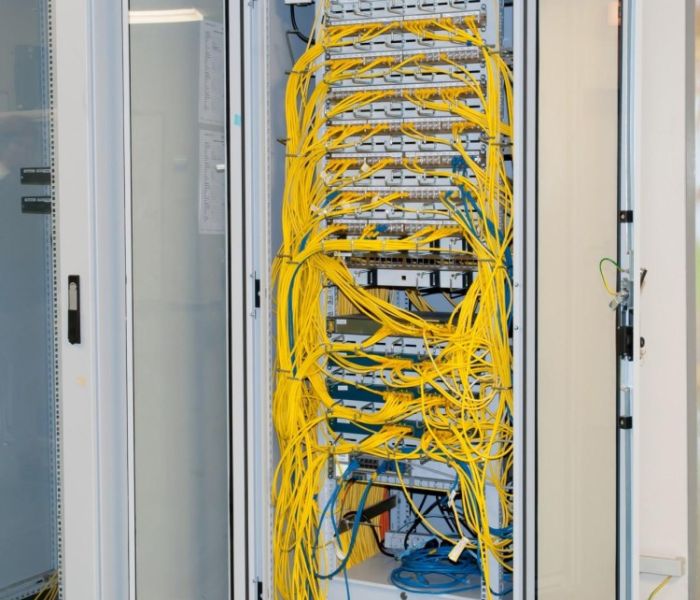
The image shows a professional close-up of an open server rack (Foto: PCE Deutschland GmbH)
In accordance with ISO/IEC 11801, the maximum length for a permanent link in structured copper installations such as Category 6a and Category 7 cabling is restricted to ninety meters. Exceeding that limit significantly elevates signal attenuation and packet error rates, directly undermining network stability and performance. Consistent adherence to this specification is therefore essential to ensure reliable data transmission, maintain service availability, and prevent costly troubleshooting and ongoing maintenance efforts.
Precise Preinstallation Cable Measurement Delivers Significant Copper Cable Savings
Accurate pre-installation measurement of copper cable length significantly reduces excessive material procurement, translating into substantial cost savings for infrastructure projects. Since copper represents one of the highest expenses in network installations, even minor overestimations accumulate rapidly when multiplied across hundreds of cable runs. By performing precise calculations before deployment, installers avoid ordering surplus cable, enabling strict budget control and efficient resource allocation from the early planning stages through project completion.
TDR Technology Calculates Accurate Cable Lengths Using Echo Time
Time Domain Reflectometry involves sending a short electrical pulse along a cable and measuring the time interval until its reflection returns. By applying the cables nominal velocity of propagation (NVP), the exact physical length is calculated. In addition to identifying the cables termination point, this technique also detects impedance mismatches or defects such as cuts, shorts, and water ingress. Its non-destructive nature ensures accurate diagnostics without interrupting existing network traffic.
PCE-CLT 10 Provides Exact Field Cable Measurements From Drums
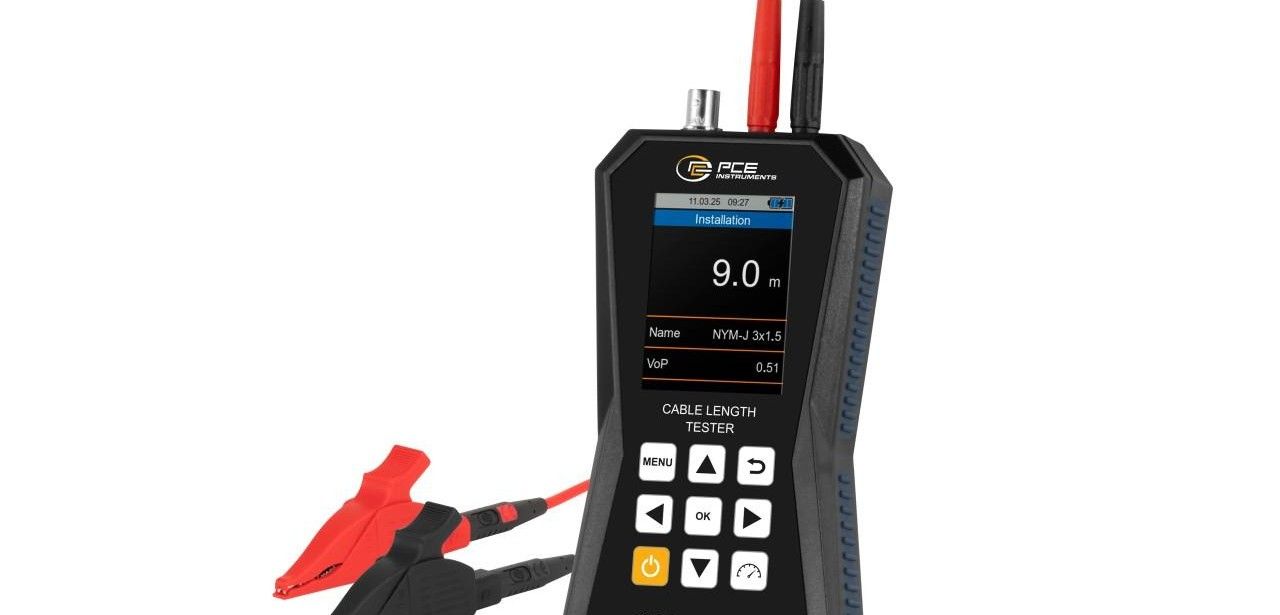
The PCE-CLT 10 cable length measurement instrument by PCE Instruments is engineered for field applications and direct readings from cable drums. Incorporating an internal database with predefined material characteristics, it streamlines configuration and accelerates setup. Additionally, manual calibration options enable technicians to tailor measurements according to specific batch variations, significantly reducing discrepancies caused by manufacturing tolerances. Its robust housing and user-friendly interface deliver reliable, precise length assessments in diverse environments.
PCE-CLT 10 Ensures Precise Network, Coaxial, Power Cable Measurements
By supporting Ethernet twisted-pair, various coaxial types and standard power conductors, the PCE-CLT 10 covers a broad spectrum of field applications. Users obtain precise length measurements, fault location and reflection analysis with clear outputs. Automatic data logging captures each test in detail, providing engineers with comprehensive records. This transparency and consistency enables project teams to complete installations on schedule, maintain budget compliance and deliver networks that meet performance requirements.
By integrating TDR technology with the PCE-CLT 10, users achieve precise cable length measurements that comply with ISO/IEC 11801 standards. This combination prevents signal degradation, reduces wasted materials, and supports reliable networks. Technicians benefit from improved project planning, optimized cost efficiency deployment. The devices capacity to detect faults and verify installation parameters ensures network stability, making modern field instrumentation an indispensable investment for long-term infrastructure integrity and operational excellence.